Table of Content
This policy covers how MHVillage, Inc. treats personal information that MHVillage collects and receives, including information related to your past use of MHVillage products and services. Personal information is information about you and is specific to you like your name, address, email address, phone number, website activities, etc, but is not otherwise publicly available. Manufactured home wallboards range in thickness from 5/16” to ½”. The 5/16” thickness used to be the most popular measurement for Paper On Gypsum wallboards, but the majority of new Clayton homes with POG wallboards are now 3/8”..
This is a specially made drywall, usually installed in places like the basement, kitchens, or garages where the chances of a fire are higher. Purple drywall can be used in both wall and ceiling applications and is particularly useful in spaces that can be easily affected by moisture and mold. The front surface of a blue board has special absorption qualities, and it has high water and mold resistance. So now that we know the history behind this product that has become a second word for drywall let us look at how it differs from other drywall products. First of all, let’s clarify—drywall and sheetrock are VERY similar…but technically they are not the same. We are proud of our wide selection of batten and molding manufacturers which gives us the ability to match up batten and molding for homes build even prior to 1995.
How much does a complete remodel of a mobile home cost?
With each sheet of drywall, you know in advance its exact size, down to the millimeter. Predictable sizing allows builders and homeowners to plan their projects and hang drywall with complete accuracy. With all of the above customary taping and drywall mudding products and practices are used to complete the installation processes. This type of drywall is utilized in hospitals or nursing homes, but musicians and singers can also use it in their home studios.
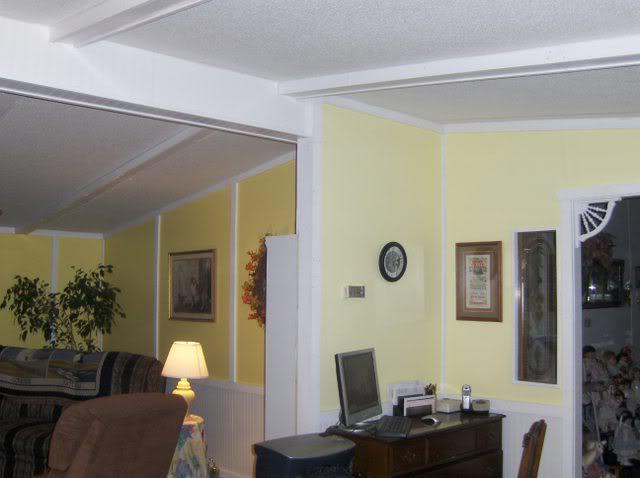
Drywall panels are made using gypsum plaster which is then pressed into a vertical frame to make a drywall. This type of wall evolved as a simpler, quicker alternative to the traditional lath and plaster walls. While a plaster wall may take up to a week to get dry, even an amateur carpenter can set up a drywall and have it ready in two days. Older manufactured homes usually have faux wood paneling or walls made from either paper on gypsum, or POG wallboards, or vinyl on gypsum referred to as VOG panels or VOG wallboards. Manufacturers of mobile homes use vinyl board panels to cover walls and secure them with battens. The battens that cover seams are referred to as “batts” by contractors.
Is it worthwhile to renovate a mobile home?
Drywall panels are also differentiated based on their size and thickness, apart from their properties, colors, and applications. As the name suggests, this type of drywall is used to further isolate noise within a space. This drywall gets its name (and color!) from a special treatment process that gives it superior moisture, mold, and mildew resistance. And since drywall doesn’t stand up well in high moisture areas, it needs a special coating to increase resistance.
Plus moving a house creates all kinds of problems, so this also helps to eliminate cracking of dry wall compound in said joints. Allow to dry completely after applying a coat of sheetrock primer. A mobile home roof can generally support a 20-pound live load per square foot load. A live load is a temporary supplement to the roof’s weight. Thicker drywall may be required by code for any wall or ceiling covered with a texture or skim coat where studs or joists are spaced 24 inches on-center rather than 16 inches. Along with its many advantages, standard sizing is one of the drywall's best features.
Mobile Home Insurance: Do You Need It and What Does It Cover
It is used during the construction of walls and ceilings in commercial spaces and homes. Perhaps the biggest drawback to ceramic tile walls is that they are difficult, if not impossible, to transport. Being so hard they have a tendency to break if the wall is experiencing too much vibration, like that caused when removing a wall or when a truck is towing a mobile through a difficult road. Ceramic tiles are a popular material used to finish mobile home walls thanks to its durability and visual appeal. Ceramic tiles come in many shapes, sizes, colors and designs, which gives decorating enthusiasts plenty of options to use when designing their homes.
An existing textured ceiling, for example, can be covered over with 1/4-inch sheets rather than going through the mess and work of removing a texture. The most common size of drywall is 4 feet wide and 8 feet long. Yes, you can absolutely use Sheetrock/drywall on curved walls.
Around doors and windows, hang full sheets and then cut around the opening. Keep the joints snug and of course, measure where openings need to be made for the electrical outlets and switches. If you are using mobile home drywall adhesive, make sure the adhesive does not squeeze out at the joints or ends. If the studs don’t line up exactly with the edges of the sheet, or there is not enough stud to attach the sheet using screws, use some mobile home drywall adhesive instead. Continue working around each room until the drywall installation is complete.

It’s inexpensive, lightweight, and doesn’t require finishing, making it the ideal ceiling material. Interior walls of single wide mobile homes are not load-bearing, but double wides do. Some companies, for example, attach the wall studs to the roof studs. This thicker drywall is often called fire-resistant drywall. Common walls between residential living spaces and attached garages, for example, require a fire-resistant construction, as do furnace rooms. This fire resistance can also be achieved by installing multiple layers of thinner drywall panels.
How Manufactured Homes Build Walls Studs, or wood boards, are used to build walls. In a manufactured home, studs are vertical boards that are usually 2′′ x 4′′ and spaced every 16′′. In conclusion, the main differences between drywall and Sheetrock™ include types, sulfur quantities, and usage. Being sulfur-free is a clear advantage that separates Sheetrock™ from most drywall types. This size is also commonly used for ceilings as they are durable, long-lasting, and won’t sag over time. While both are thicker than regular drywall, Type X provides up to an hour of protection from fire, while Type C can provide up to four hours of protection.

Not a common thickness, 1/4-inch-thick drywall is used as a skimming (or double-wall) material for placing over an existing surface. Depending on the type (fire resistance, moisture-resistant, etc.), you can expect material such as vermiculite, boric acid (anti-mildew), silicones, and wax. Apart from regular drywall, moisture-resistant and mold-resistant types are available in this width. This type of drywall is rarely used while constructing a new structure and is rather used as a cover-up material during remodeling or renovations.
Chair rail and wall trim Make your own stencil wallpaper by yourself.
If the drywall is not quite meeting the curve, you can slightly dampen the drywall to make it more flexible. The 4-foot by 8-foot size allows for either vertical or horizontal installation. Typically 4 by 8-foot panels come attached in pairs—two sheets face to face, with paper strips binding the two sheets. Most people find it extremely difficult to carry these sandwiched panels by themselves, and they can be difficult to cut.
Soundproof drywall contains more layers than normal drywall, including wood fibers, polymers, and gypsum. If you’re in search of drywall that gives you more control over the wall finish and a shorter mounting and installation wait period, then you need a blue board. Moisture-resistant drywall comes with a special coating that gives it a green shade.
This makes for better wall-to-ceiling joints since the wall boards will be secured tight to the ceiling boards. The thickness of manufactured home wallboards ranges from 5/16” to 12” and is available in a variety of thicknesses. Although single-wide mobile homes are designed to be light, the majority of them still have wooden studs on the walls. Manufacturers frequently cover the walls with 1/4-inch paneling, but studs can support drywall, so you can remove and replace the paneling without having to remove it.


No comments:
Post a Comment